Parish/Church
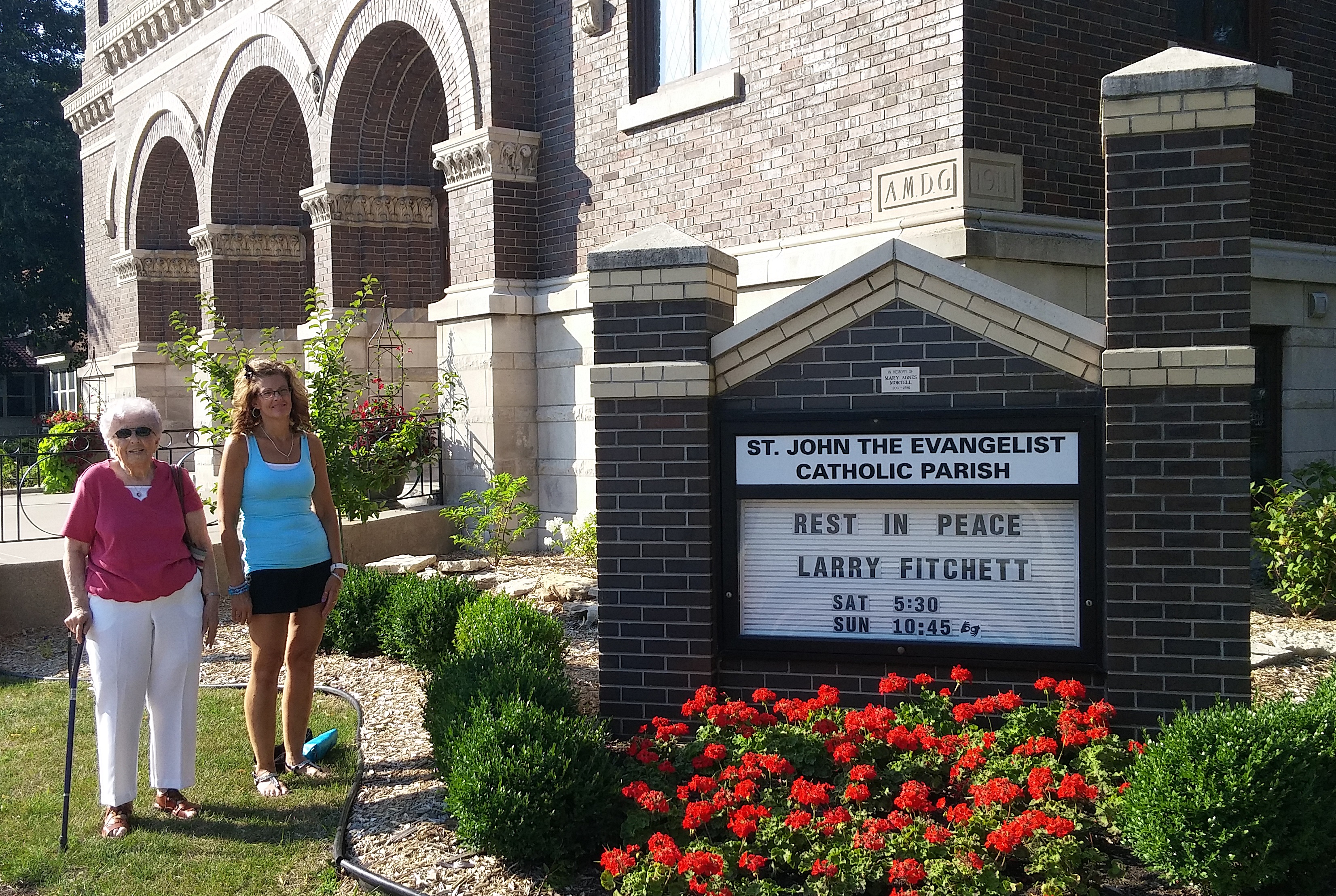
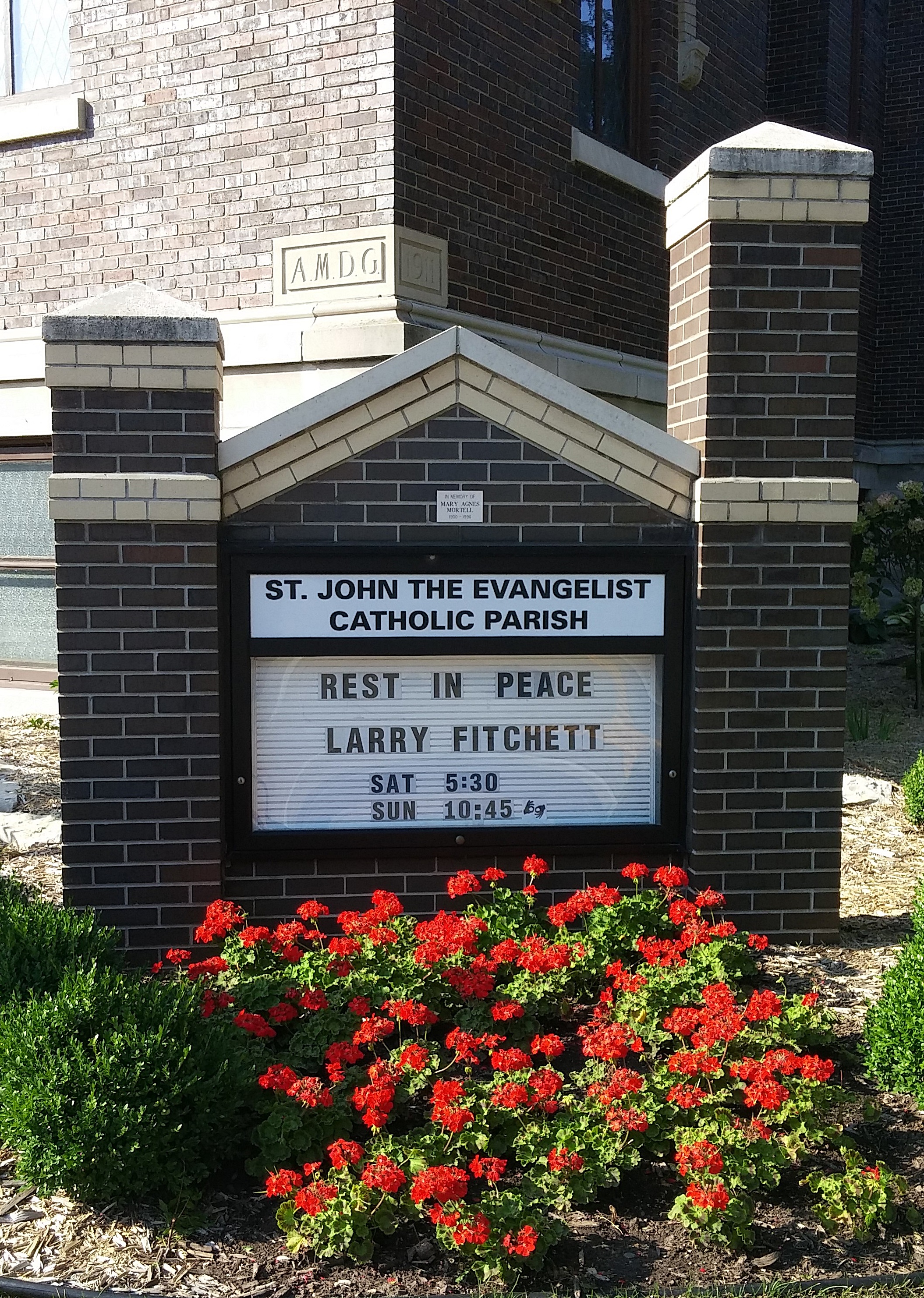
St. John the Evangelist – Green Bay
Date and Mass time
August 15, 2015 – 5:30PM Mass
Celebrant
Reverend Joseph E. Dorner
Deacon Tom Mahoney
The trip there and back
This was a last minute trip to say the least! We missed out trip in July due to the holiday stuff and in early August we missed our planned trip due to family camping issues. I was on call this weekend so we didn’t have a lot of wiggle room if I got paged, but we found this Mass and decided to make the trip.
Kay’s mom made the trip with us and on the way we were a little early on the way there so we drove past Bay Beach to check it out. Parking was much better than expected with the lot right across the street.
On the way home we stopped at a couple stores and took the new Hwy R (it was recently repaved) home. We stopped at Subway to take home subs for dinner.
Weather
HOT! One of the ideas was to find an air conditioned church as Kay and her mother do not care for the heat. The church was not air conditioned, and it was warm, but not too bad. It IS summer, even though it sure is flying by!
Parish History
The parish has a REALLY nice history on their website, and it is copied here:
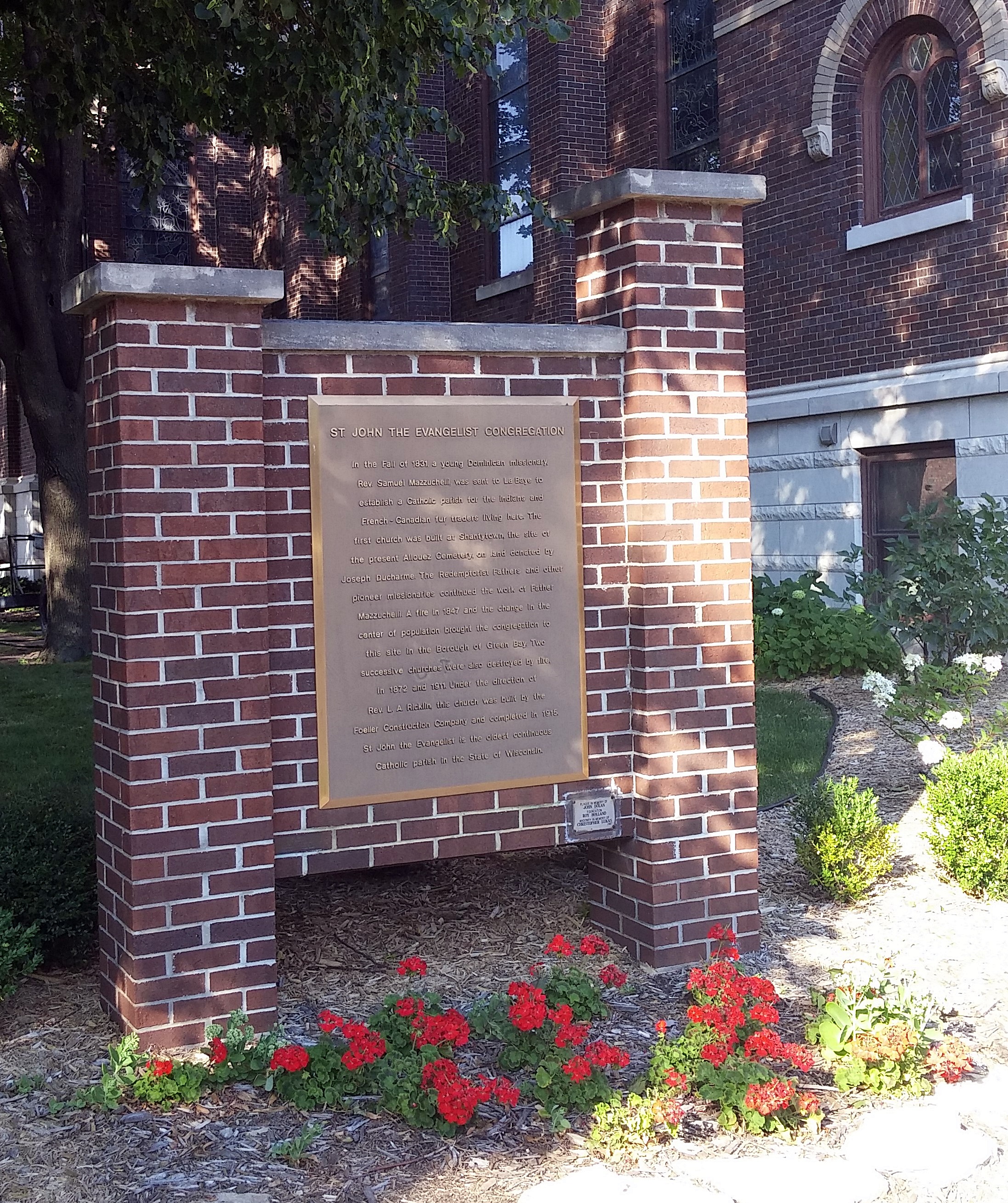
The congregation of St. John the Evangelist is the the oldest Catholic organization in Green Bay, and it can be safely added, of Northern Wisconsin, as it was attended by regular pastors as early as 1831. St. John's can also claim to be the first organized attempt to perpetuate the labors of the early missionaries, Fathers Allouez and Marquette. It is, in fact, the mother church of the City of Green Bay, as from it had branched out the German church, in 1853; the Hollandish, about 1860; the St. Patrick's congregation across the Fox River, in 1862; and the SS. Peter and Paul's church, in 1893.
St. John's Church at Shantytown was the place of worship for the Catholics of the Green Bay area from 1831 until December, 1847. The following article from the Green Bay Advocate describes what happened at the end of December:
"Destructive fire-- The Catholic church, situated two and half miles above this place, was discovered to be on fire about half past nine o'clock on Sunday morning and entirely consumed with most of its content. The main body of the church was built in 1830, and two large wings, designed for a seminary of learning, were added in 1839. The cost of the whole structure, with fixtures, is estimated to have (been) $20,000. The loss falls heavily upon a congregation entirely unable to build another. We trust the appeal they are now making to our citizens will be generously answered. Over $1000 has been already subscribed."
After the little church burned down the French Catholics sought a new place to worship at the lowest possible cost. At that time the Methodist Society of Green Bay was deep in debt; their church, the first Protestant church in Green Bay, had been built by Mr. Edwin Hart in 1836-37. It was a simple building, about 34' x 38', erected on Milwaukee Street (now St. John Street) in the town of Astor on the present site of St. John's church. When financial woes forces the Methodists to abandon their property in April, 1848, they sold it to Bishop John M. Henni, Catholic Bishop of Milwaukee, for St. John's Congregation.
After moving into their "new" church, the parishioners assisted in furnishing it with whatever they were able to donate. Things such as alter cloths, pieces of lace, vestments, sacred vessels, furniture, etc., are shown in the "Livre des Bienfaitures" (Book of Benefactors). In these still early days, with only one Catholic church in the area, priests of St. John's performed baptisms, marriages, and burials on almost a daily basis. Services were conducted in the outlying areas as well as in the little church in Astor.
By the mid-1800's the area was growing in size and population and Astor and Navarino were merged to form the City of Green Bay. People of all ethic groups began to settle here, changing the character of the area. St. John's, originally comprised of French-Canadians and Indians, was no different, and the people, though together, where seperated by language and culture. The German group was the first to seperate from the "mother church," and a German-speaking priest served them until their own church was built in 1854. They called it St. Mary's Congregation, and it later became St. Francis Xavier, the Cathedral of the Diocese of Green Bay.
In 1854 the Dutch and Flemish parishioners left St. John's to join the German group, however they returned to St. John's until 1864 when 47 families formed St. Willebrord's Congregation a few blocks away. In 1865 the Irish left to found St. Patrick's Parish on the corner of Ashland and Elmore Streets in the Villiage of Fort Howard. Gradually, other parishes were formed in the city, and the original nickname, "the French Church", remained with St. John's through the years, and it was still called that by some of the older citizens of the area well into the latter half of the 20th century.
Through the years, many additions were made to the little church purchased from the Methodists. In 1862, the church was painted and a new door stoop and sidewalk were provided. In 1970 Reverend Phillip Crud came to serve at St John's and it was his desire to build a new church for the Parish. The foundation of the new (third) church was laid in the Fall of 1871, but before the construction could begin in the Spring, the second St. John's church was destroyed by fire. This article appeared in the March 28, 1872 edition of the Green Bay Advocate:
"Church Burned-- At about 6 o'clock on Wednesday afternoon of last week, the French Catholic church in this city, known as St. John's church, took fire in some manner from the heating apparatus, and although an alarm was promptly given, it was entirely destroyed. The building was old and dry, and located so far away from the engine-house that the flames were too far advanced when the fire department arrived to stay their progress. However, there was ample opportunity to remove the valuable pictures and ornaments, which was successfully accomplished. This church was completed for the the Methodist Society by the brothers Asahel Hart, of this city, and Edwin Hart, now of Oconto, in 1838, and it was used by them for a house of worship. Then years afterward, it was sold to the French Catholic Society who have occupied it ever since. It was, we believe, the oldest church in the city. Severr as the loss is to the society, it will not be felt as much as it otherwise would from the fact that the foundation for a new and beautiful church ediface to take its place was laid last fall and the superstructure was to be commenced this spring as soon as the frost was out of the ground. The building was insured for $2000. The residence of the Priest and that of Mr. C. A. Lawton were at one time in danger, but were saved without a scratch. Some valuable fruit trees in the yardof the latter were destroyed."
Progress of the new church building was rapid following the fire of March 1872. It was finished with a brick exterior and was about 45 ft. by 100 ft. in size. Tall twin steeples graced the front corners of the church and a triple archway led to the entrance doors, and a rectory was built in the place of the old church. It was thought to be one of the finest churches in the State of Wisconsin. With Bishop Melcher presiding, the church was dedicated on November 24, 1872.
The first St. John's School in the city limits was organized and opened by (then) Father Joseph J. Fox. The School Sisters of Notre Dame were placed in charge of the students in the old St. Mary's (Cathedral) building on Madison Street. Father Fox also directed construction of the rectory on parish grounds. It also interesting to note that so great was the feeling for Father Joseph Fox as their pastor, a petition was sent to Bishop Krautbauer in 1883 by members of the St. John's as follows:
"We, the undersigned members of the French Congregation of the City of Green Bay, feeling assured that your Right Reverend having the welfare of said Congregation at heart, hereby beg leave to petition to you as our Father in God, to allow our beloved pastorm the Rev. Jos. J. Fox, to whom we are endeared, to remain with us. Your Right Rev. being aware of the fact that it is necessary to have a priest stationed there acquainted with the English language and the Rev. Jos. J. Fox having so well served us, we beg for the welfare of the said Congregation to allow him to remain."
In 1888 the Fathers of Mercy were put in charge of St. John's Congregation. Under the direction of Rev. S. M. Wiest, rector, a school was built-- the first on church property. The cornerstone was laid by Rt. Rev. Bishop F. X. Katzer on August 4, 1890. The first teachers were Sisters of Notre Dame and the Fathers of Mercy.
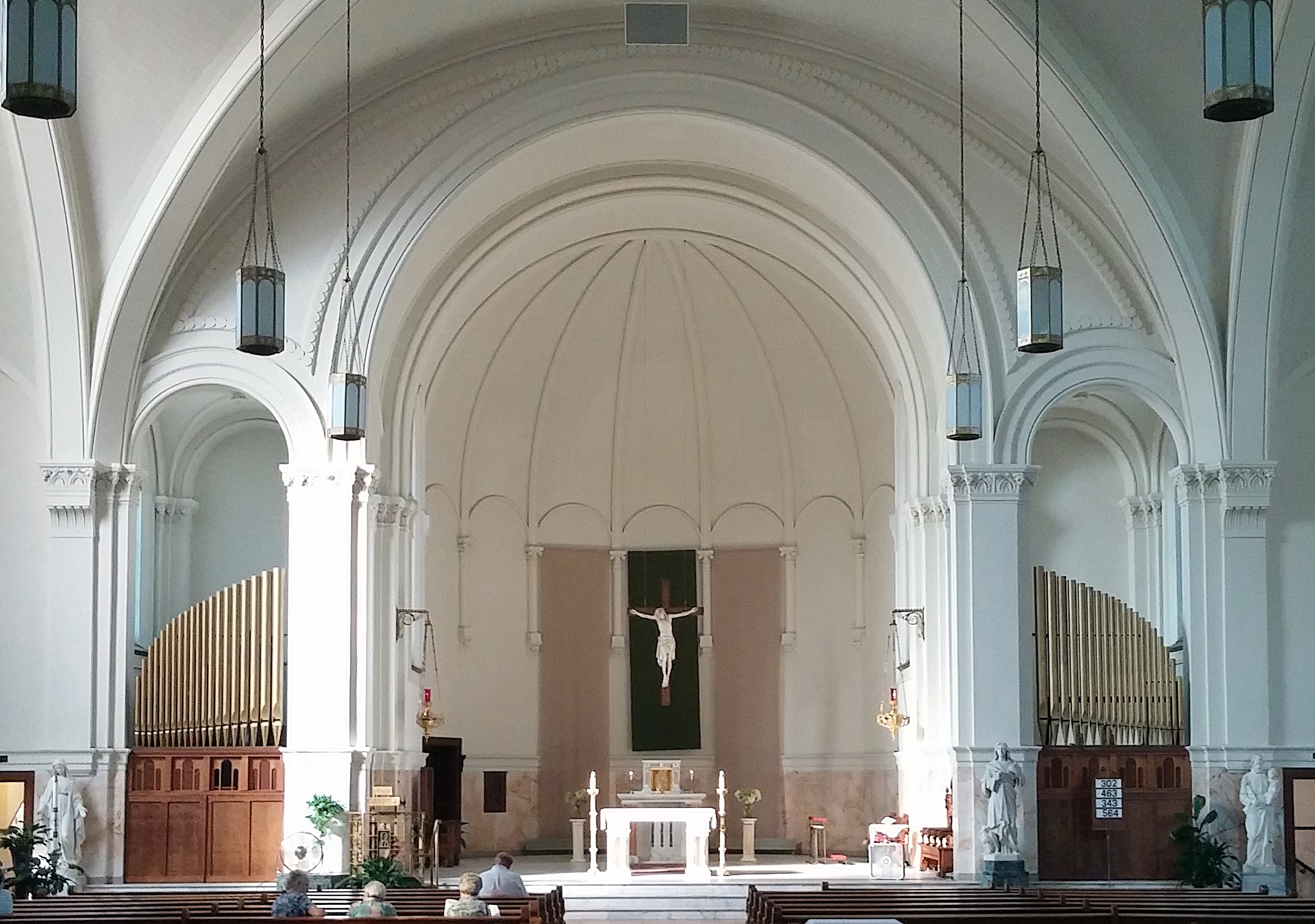
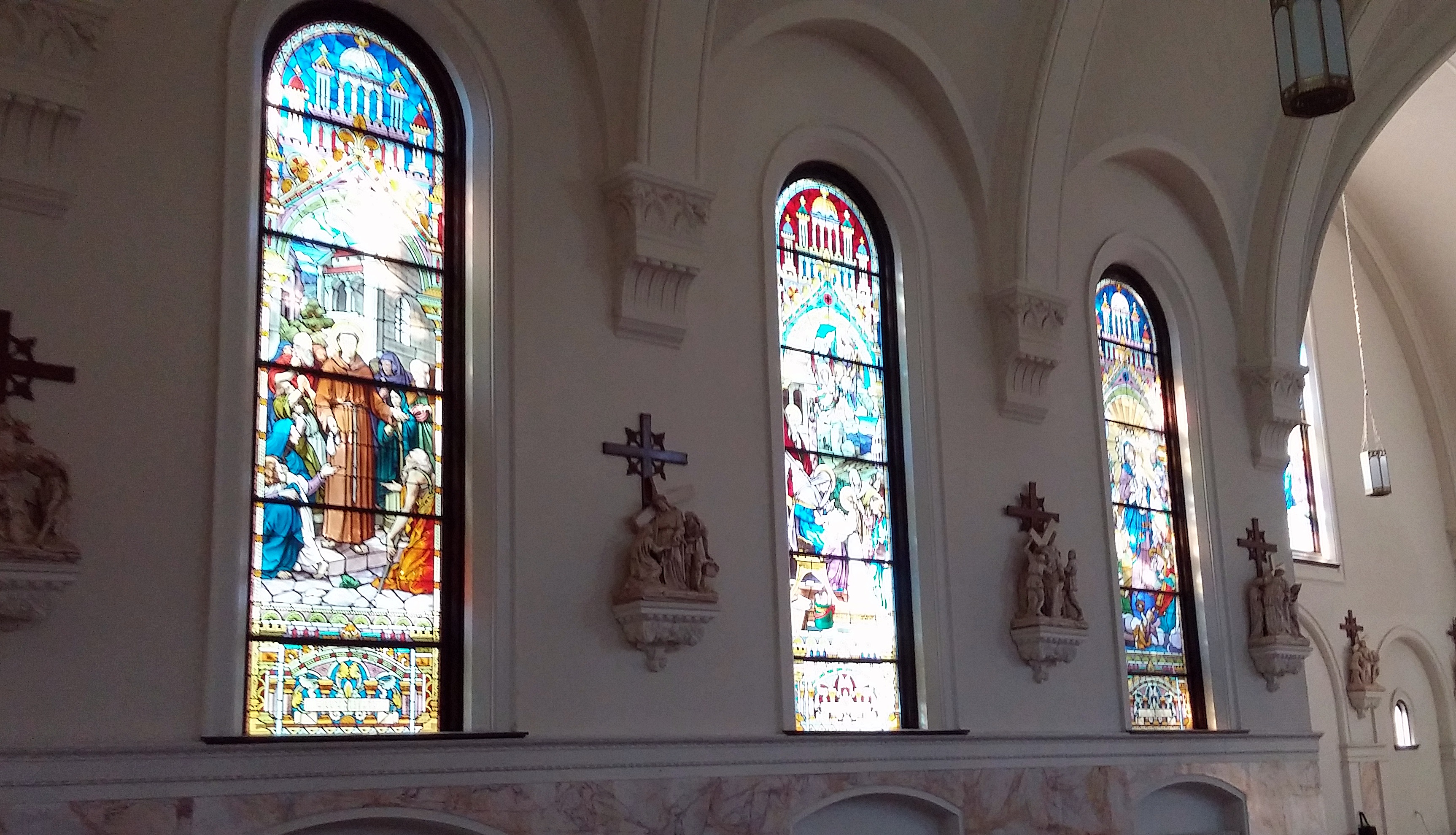
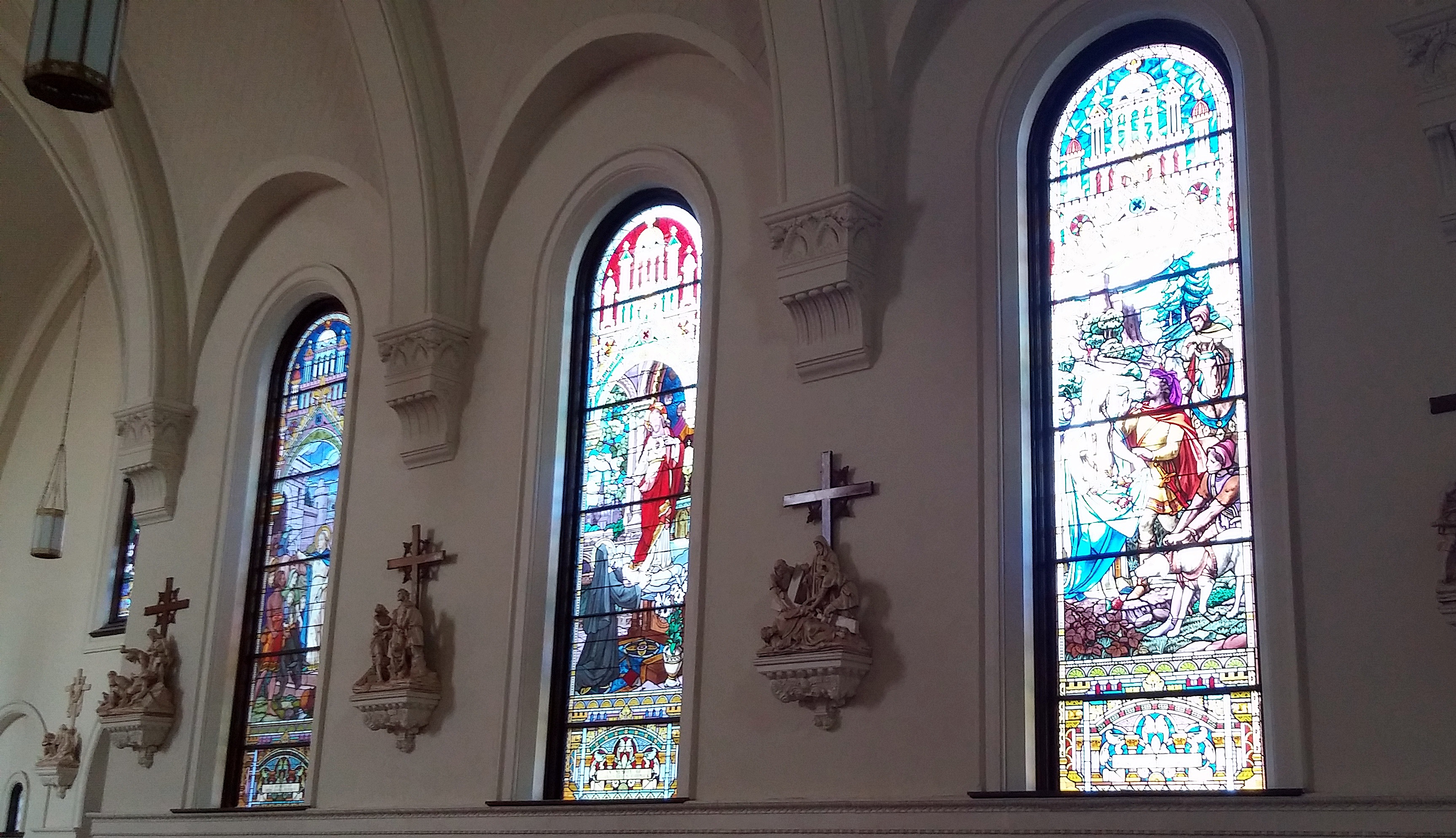
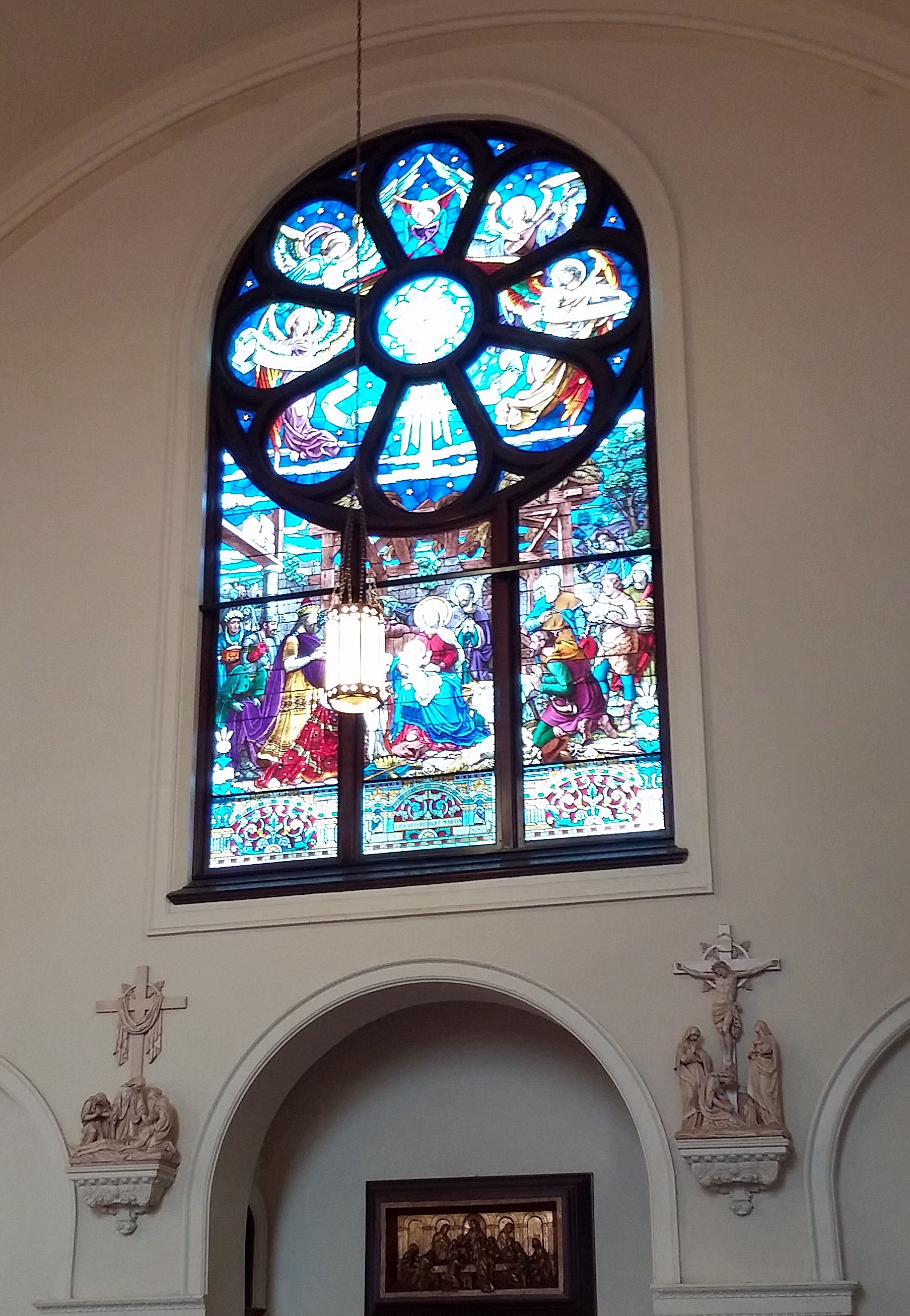
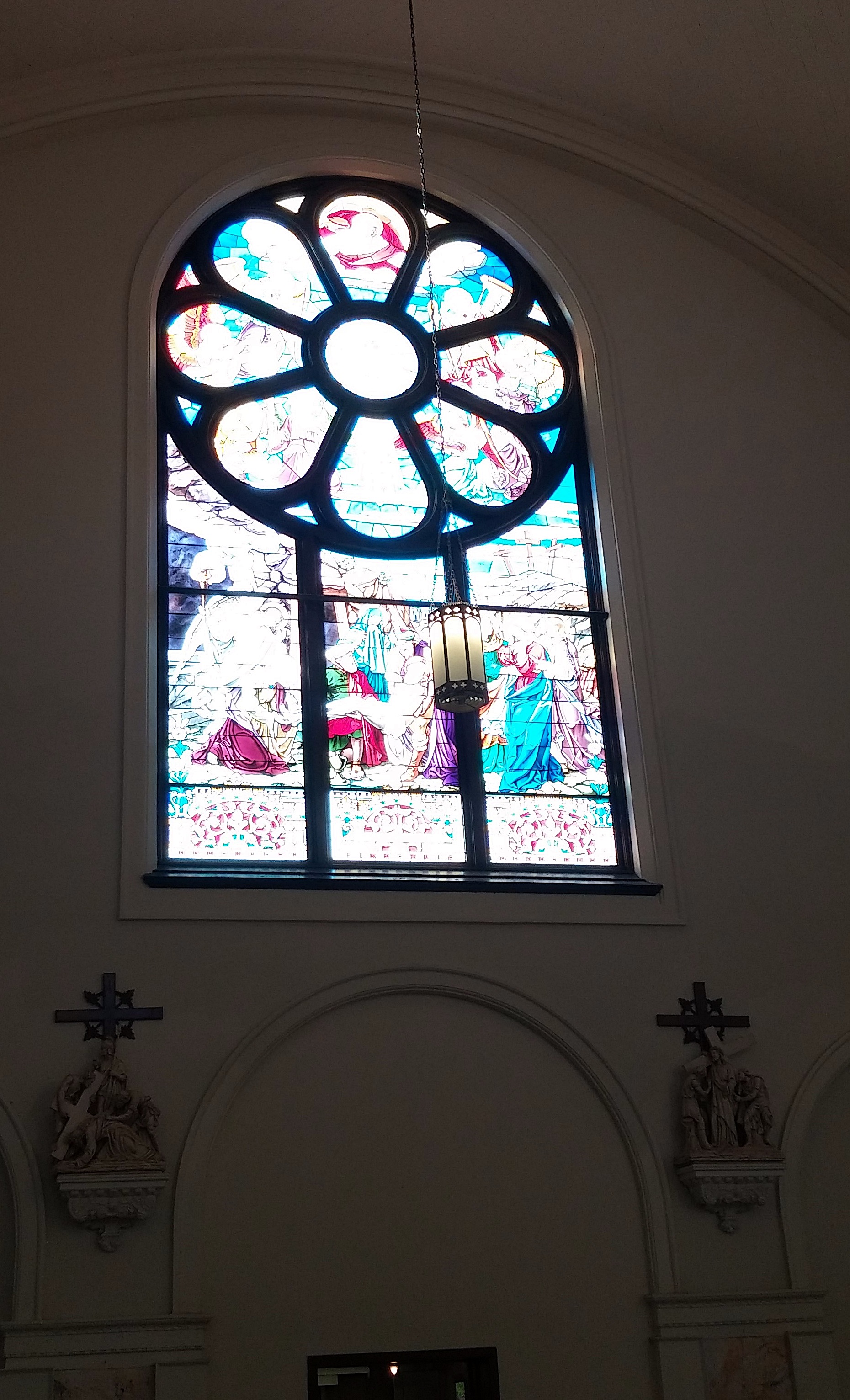
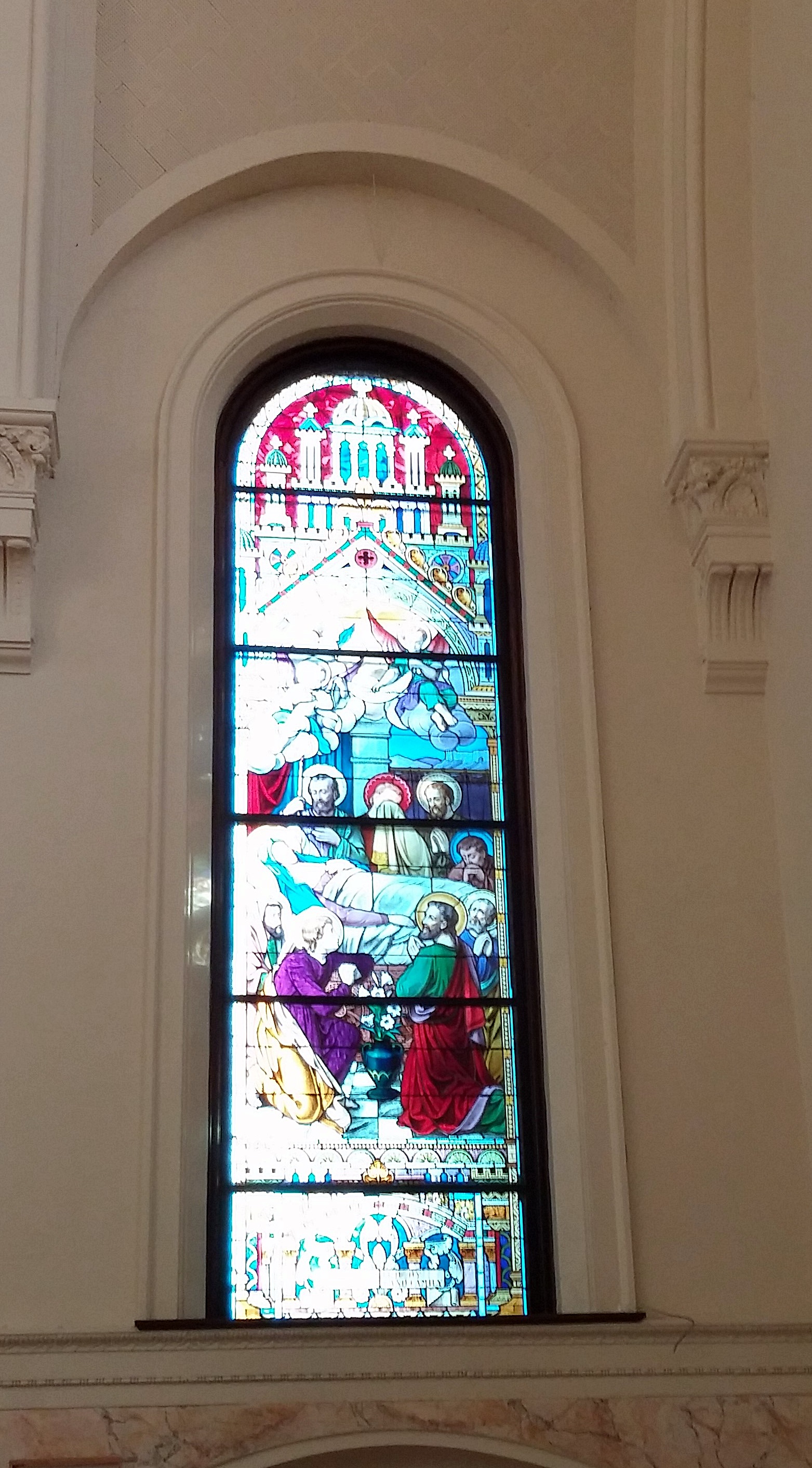
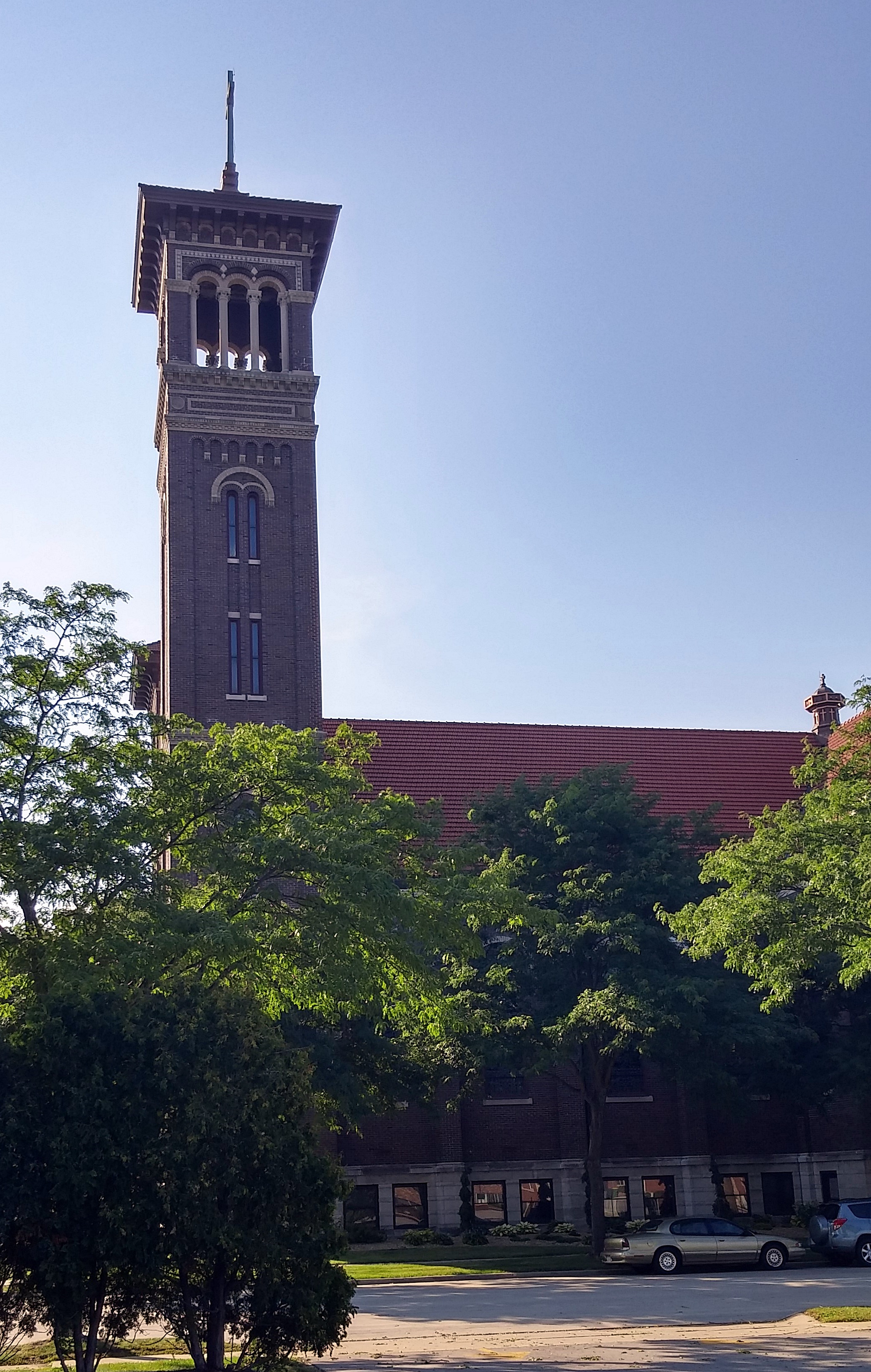
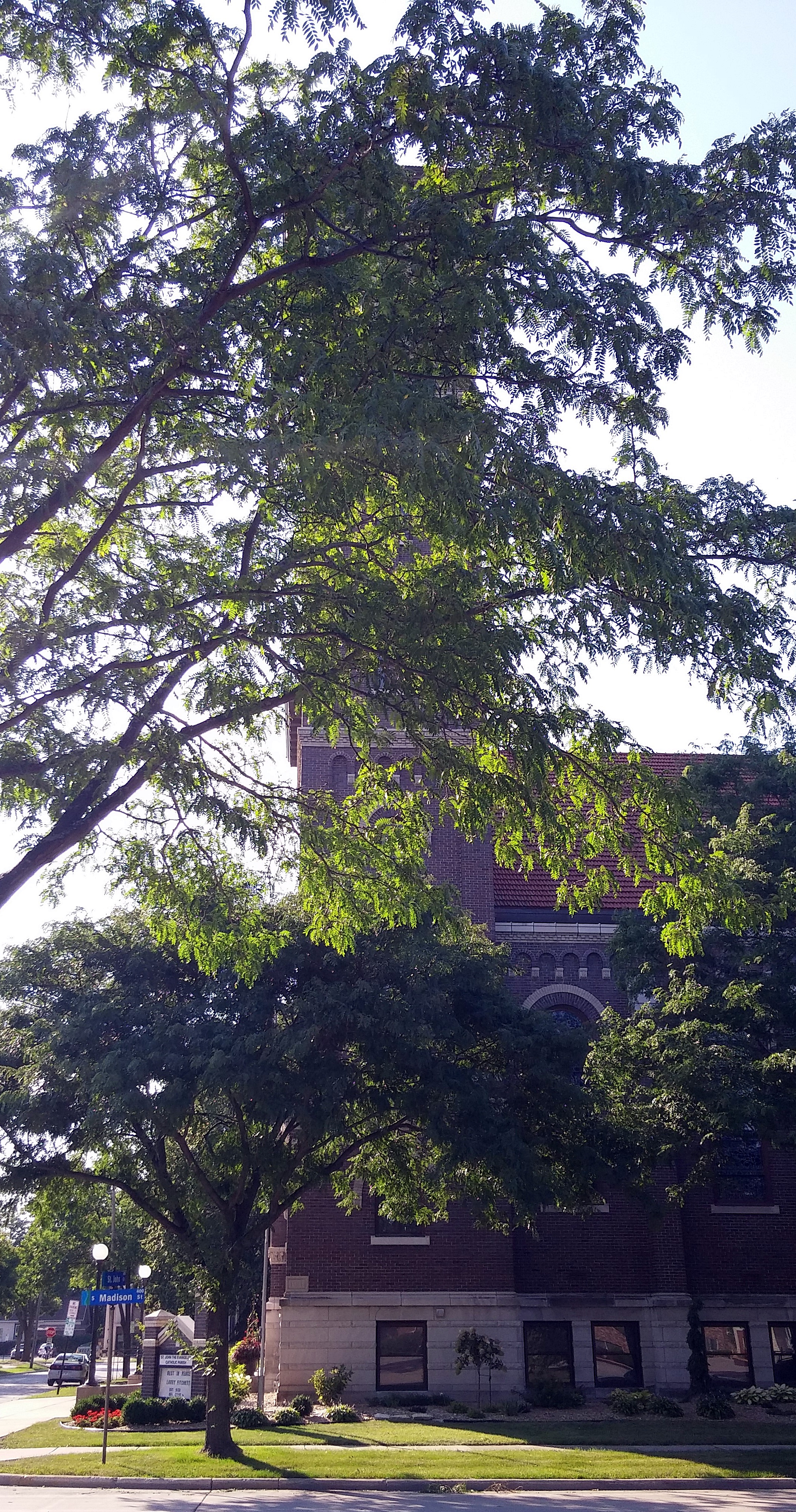
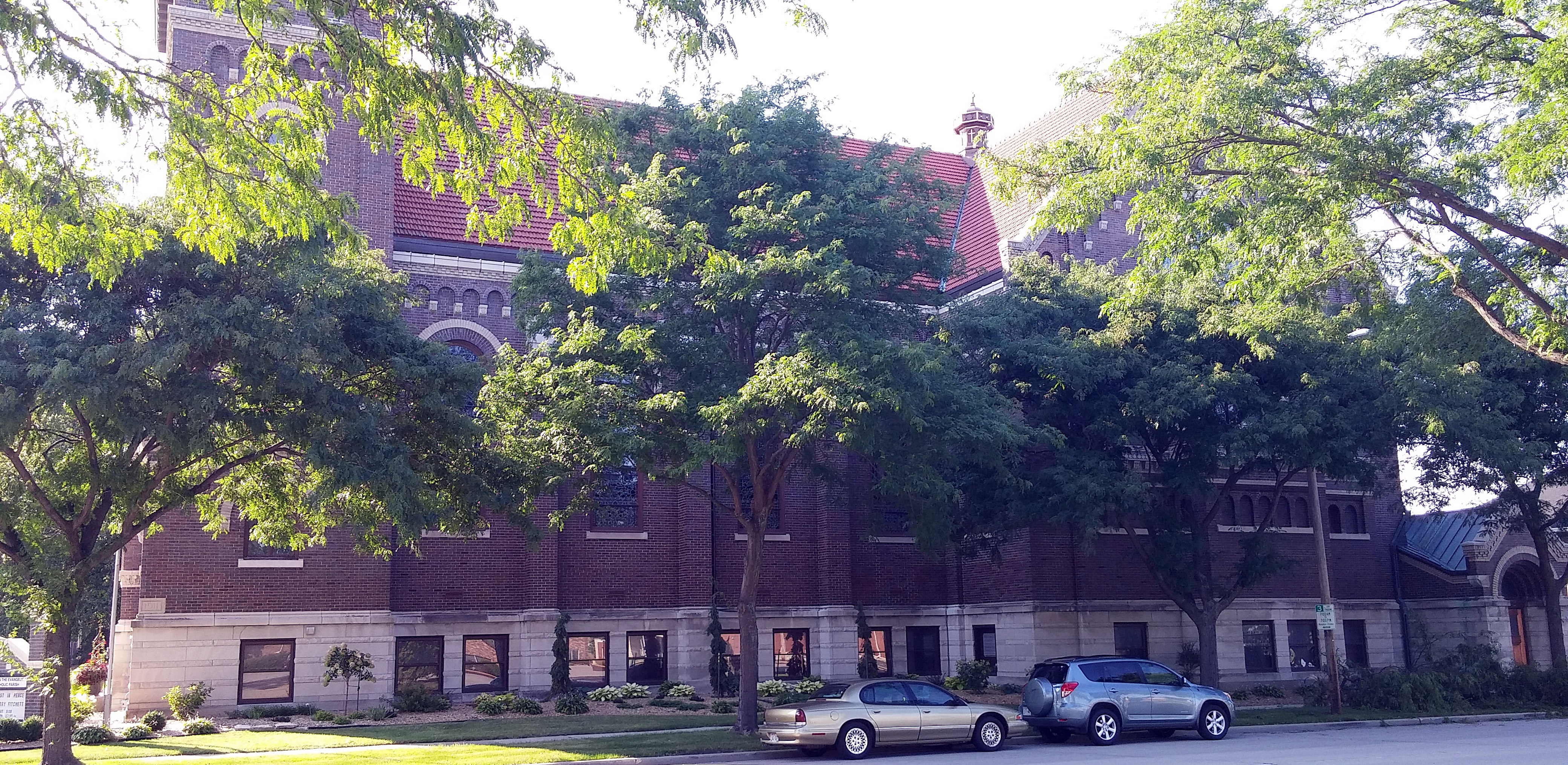
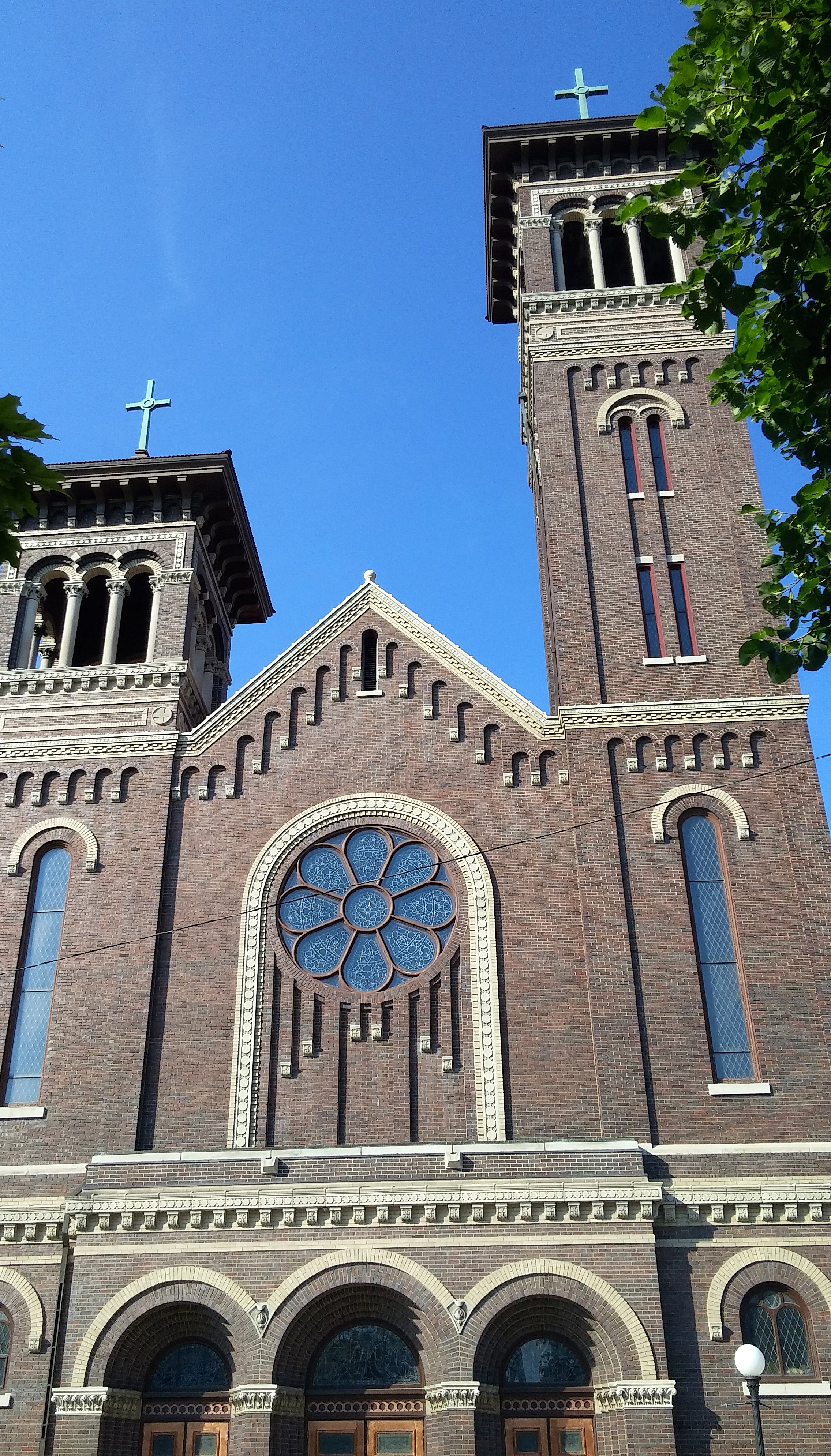
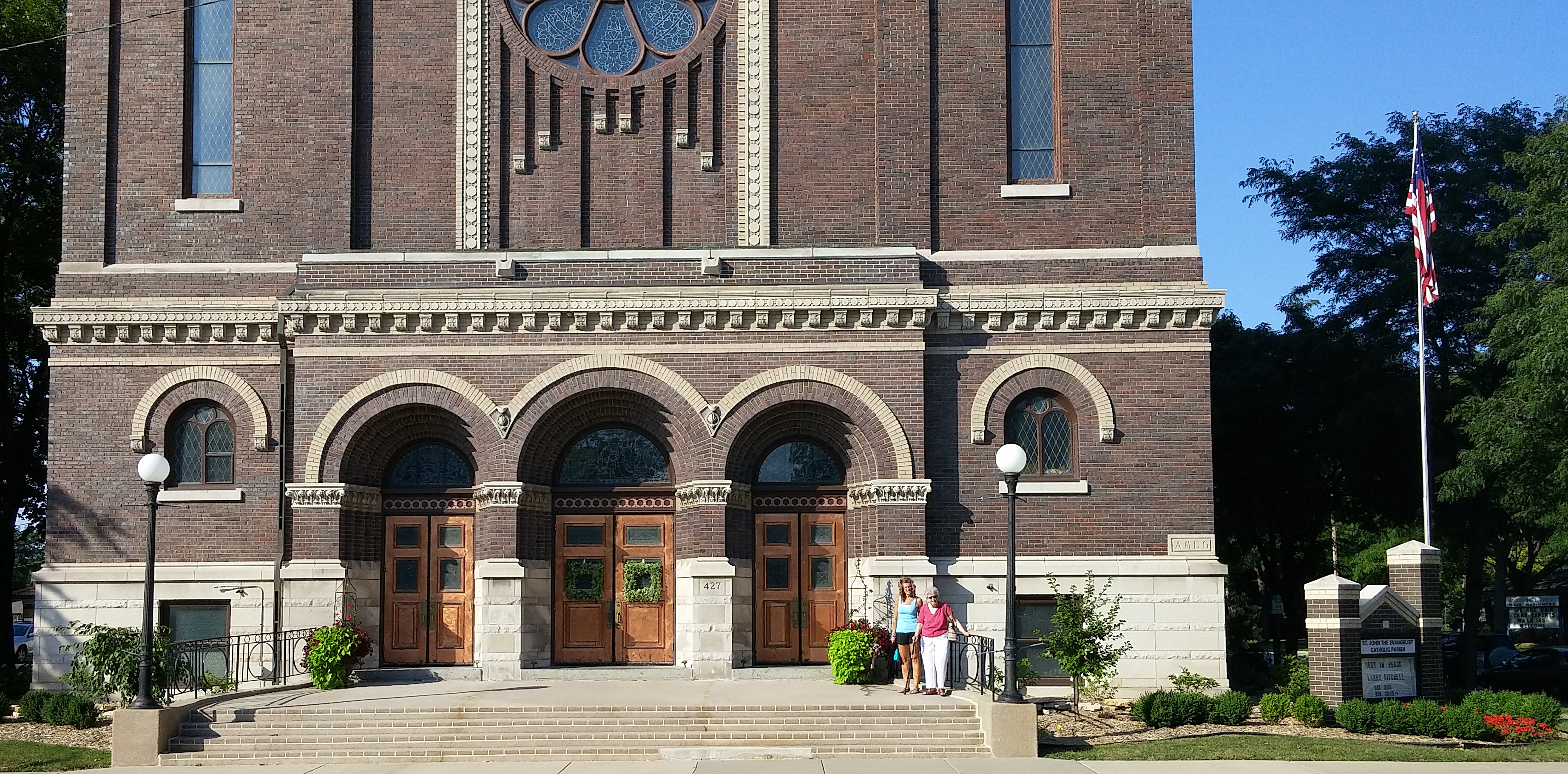
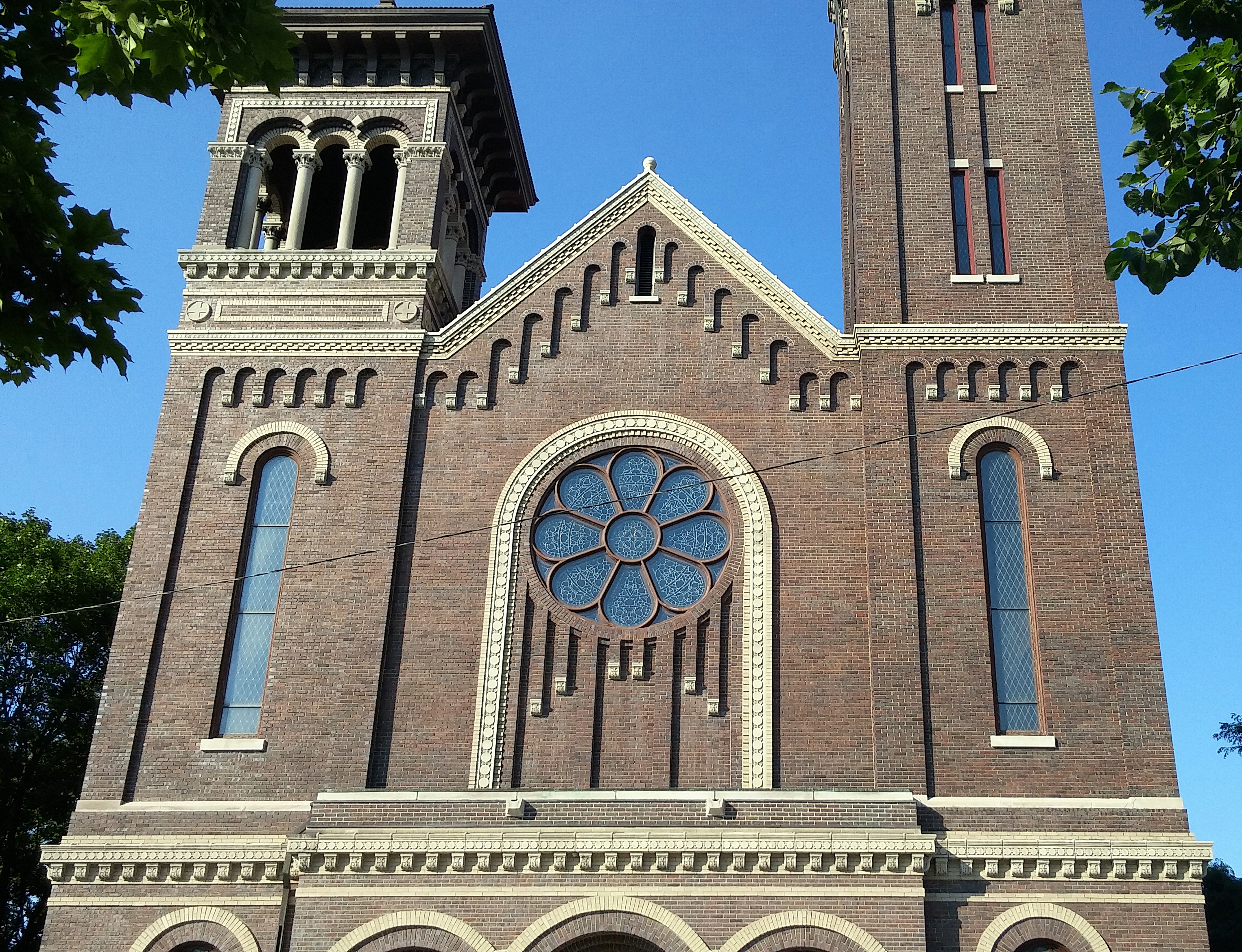
On March 13, 1911, a third disastrous fire occurred at St. John’s, faulty wiring the cause. The new church caught fire, gutting the building. The parishioners again built a new church, on the opposite side of the rectory, completing the French Romanesque style structure in 1915. Rev. Leo Ricklin, then pastor of St. John's Congregation, supervised the construction of the present church located on the corner of St John and South Madison Streets, which was the former site of for the C. A. Lawton House, The Convent of the Sisters of Our Lady of Charity, and the first St. Jospeph's Academy. This church was designed by architect Henry Foeller with Jospeh Foeller as the gerneral contractor and Fabry Construction Company in charge of the masonry work. Artist Charles Lorin of Chartres, France, created the stained-glass windows. During the first half of the 20th century St. John's grew to be the largest congregation in the city, but by the 1970's and 1980's it became the smallest congregation in the city.
This fourth church, which was 100 years old in 2011, has stood the test of time, undergoing numerous renovations and imrpovements while maintaining the original Romanesque style architecture of the interior and exterior. The recently restored stained-glass windows, created by Charles Lorin of Chartres, France, continue to reflect the original French influence. The make-up of St. John's Congregation, originally founded to minister to the French-Canadians, the Menominee, the Chippewa, and the settlers of La Baie Verte, has changed, but the spirit of community and reaching out to the greater community continues today.
On Jan. 1, 2013, St. John the Evangelist Parish launched a one-year welcoming campaign it calls “Growing in Faith” with the goal of telling the story of this faith community and inviting those “shopping” for a parish to make St. John the Evangelist their home. Since its inception the “Growing in Faith” campaign has seen 77 new parishioners join the parish. "Come for the beauty, stay for the faith."
Reflections
Funny how God directs our actions… He IS GREAT!
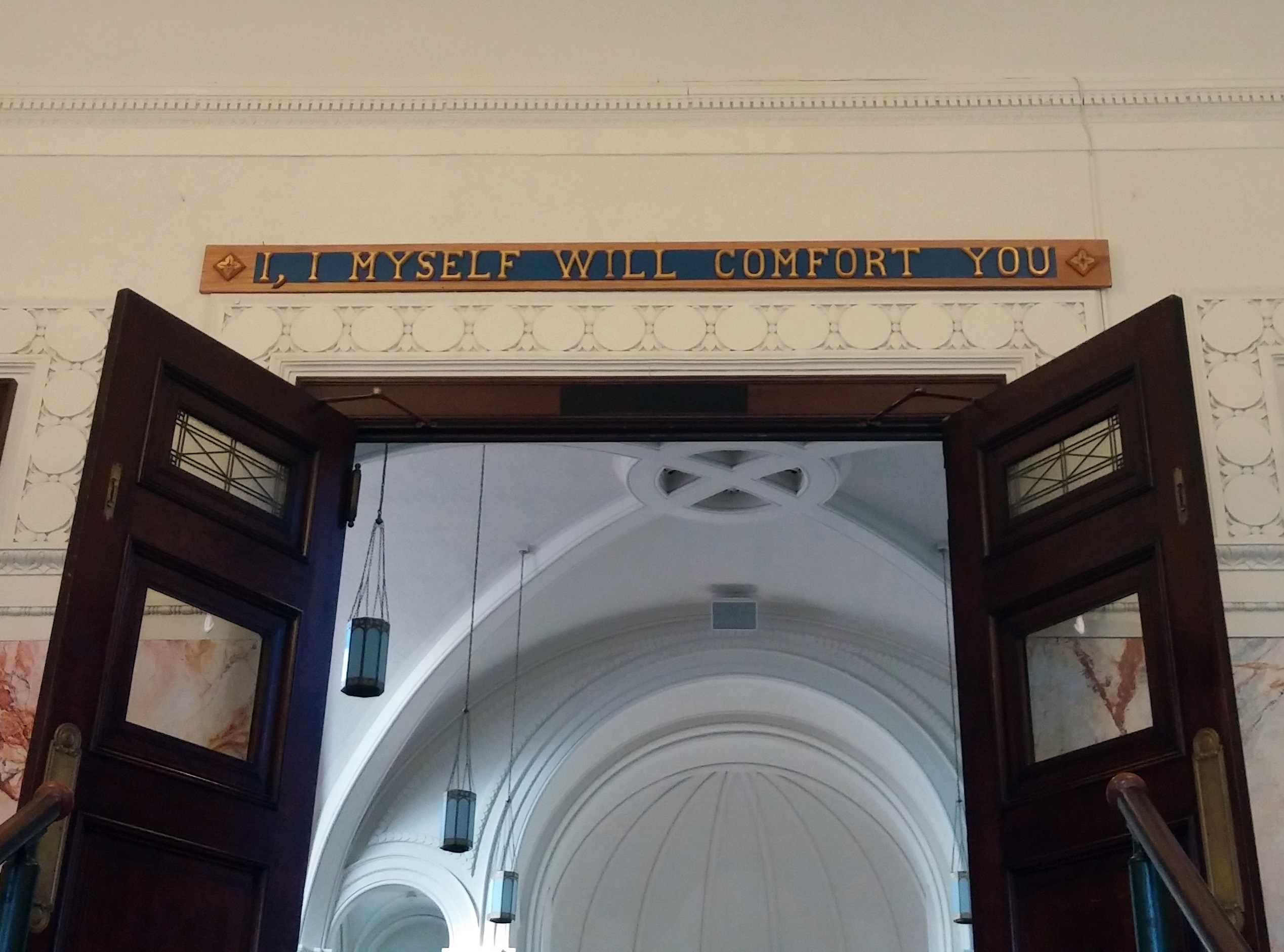
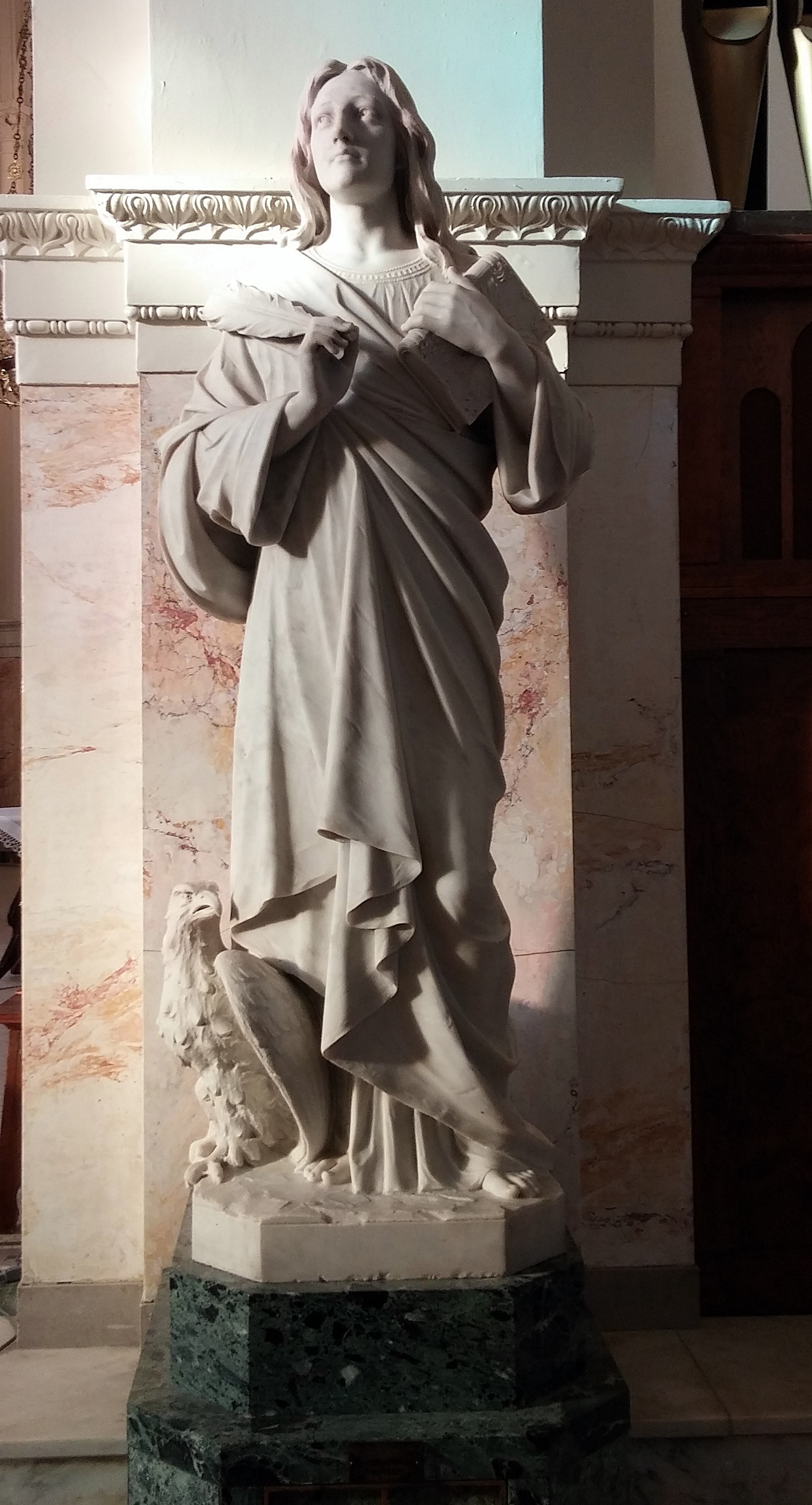
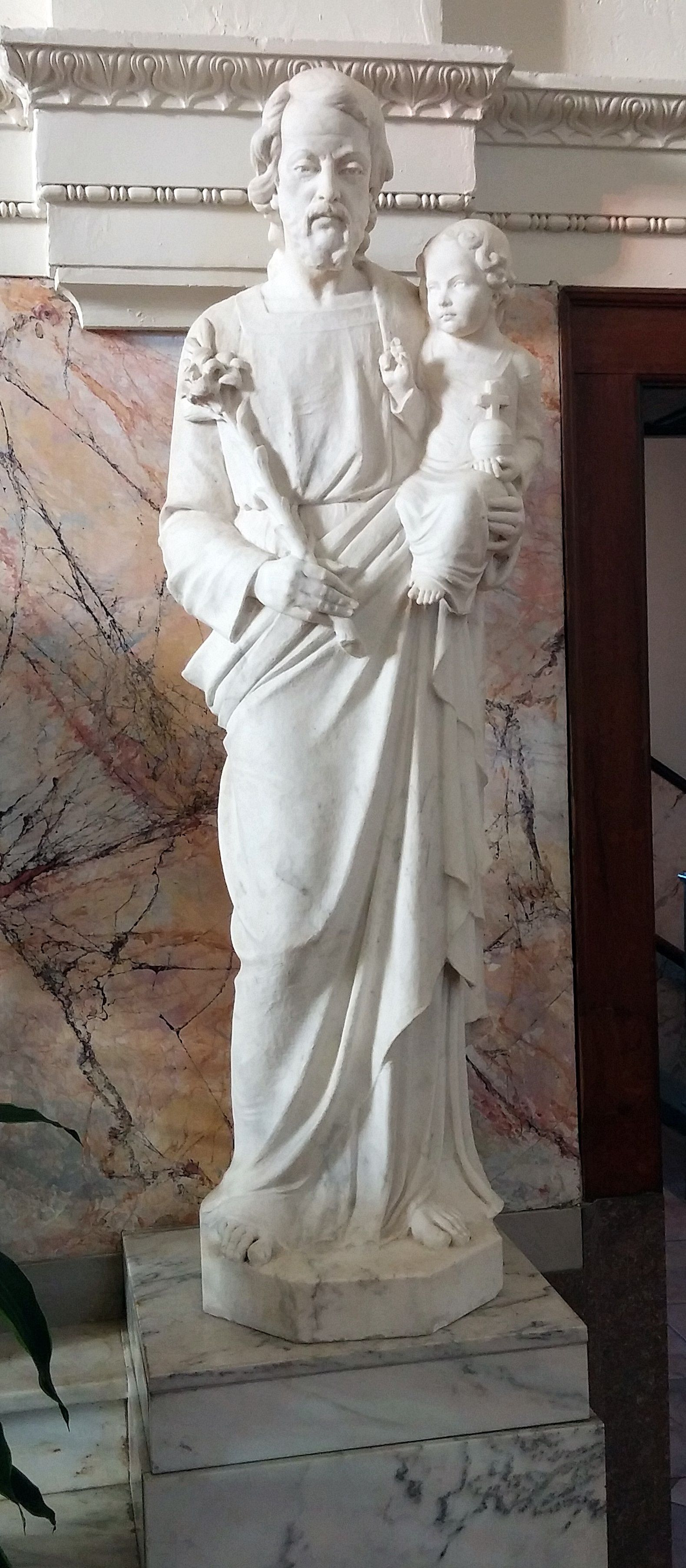
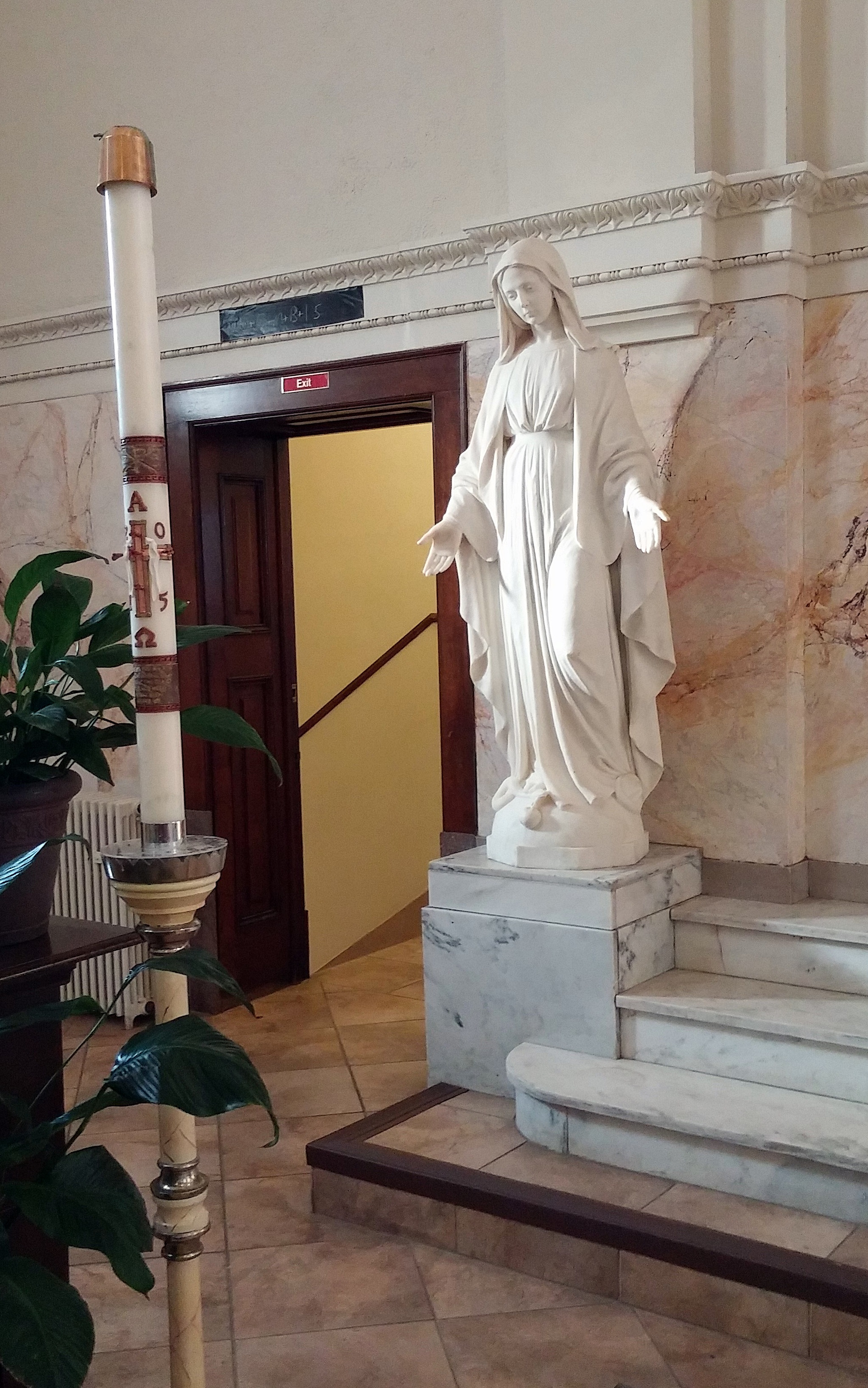
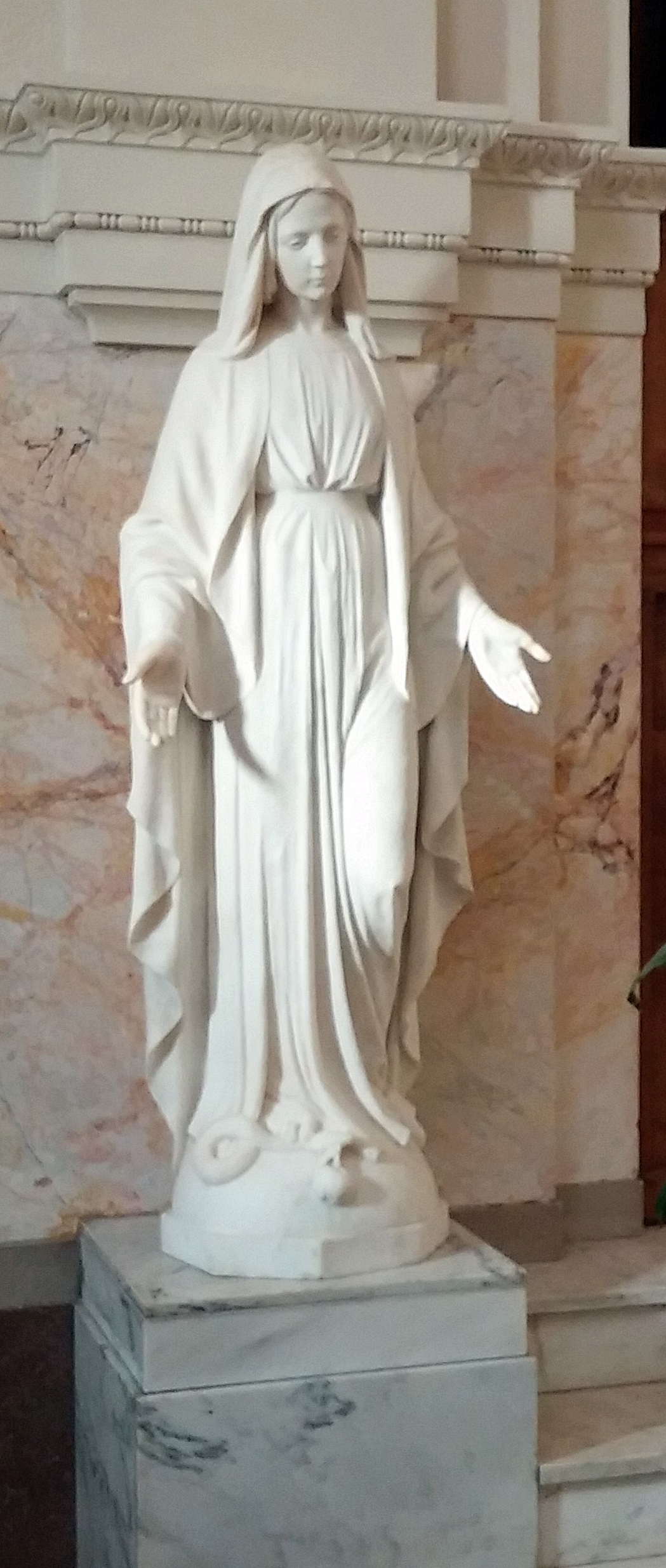
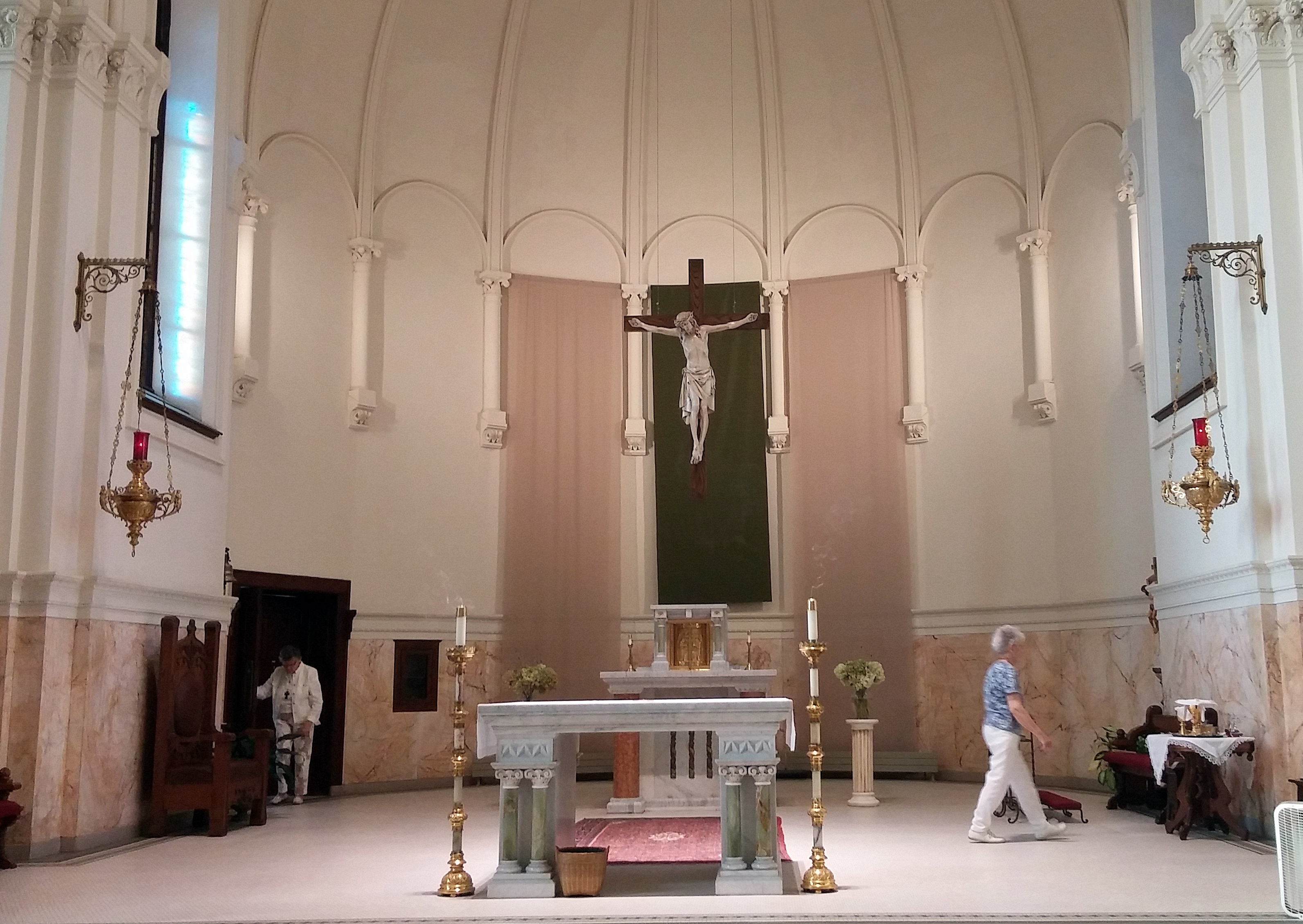
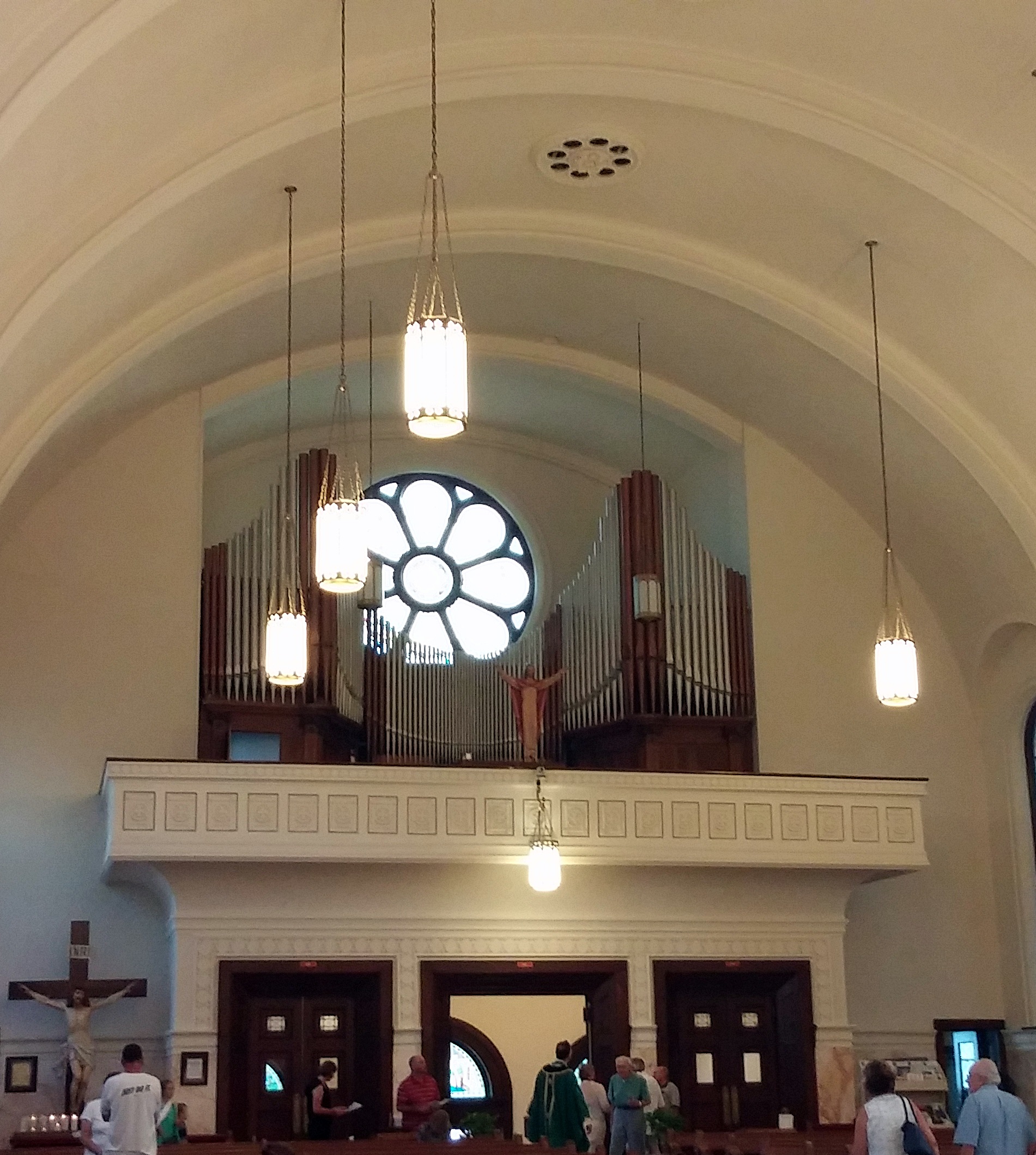
This being a last minute idea and trip, it certainly turned out great. This is the oldest continuously running parish church in the diocese and has some fantastic history to it. It is also a “grand” old church with lots of stone and marble, high ceilings, and a “big” feel to it. It is very impressive.
Being a typical Saturday evening Mass, it wasn’t packed by any means and it was an elderly crowd. The Mass was very beautiful and meaningful, and we especially liked Father Joe’s homily. He started with how we often have people, good friends in life, that sometimes just fade into the past due to time and circumstances. He related that to how if that happens between you and God, what a sad and terrible thing that can be. It can happen almost in the same way as it does with old friends, if we let it, and despite God’s constant attempts to get us back into the relationship with Him, if we do not maintain that relationship, it can die. What a great message.
The Gospel was on Jesus being the living bread and the True Food and True Drink. What a difficult message that must have been for the early Christians, and if we REALLY think about it, how hard is it for us?
Through the Mass I did some reflections on Deacon Tom’s ministry… I will need to pray some more on that…
At the end of Mass they had a small presentation on a program they will be offering this fall for the men of the parish called “That Man is You”. The program is about becoming a man after God’s own heart. I took a minute after Mass to talk to Sean about it and grabbed a brochure. Who knows, but maybe this is something for me. I also offered to pray for his 8 year old son Seth, who after visiting the Carmelites in Denmark, wants to become a priest! Wow!
What a GREAT trip!
Pictures